
Humane Security Systems: When Control Disappears, Protection Must Scale
When an AI release is beyond your control, the only defensible move is to build infrastructure that protects what endures—people, ecosystems, and intelligence itself.
Part of the Adaptive Intelligence Playbook: A system for leading in the age of agents.
Signal
When OpenAI’s launch of GPT-5 it triggered a universal reset: one where every prior model tier was deprecated immediately. Models no longer coexisted—they vanished overnight. This collapse of diversity accelerates standardization and erases optionality. Leaders can no longer hedge on having a choice. The real frontier isn’t which model you deploy—it’s whether your systems, people, and governance can withstand resets that are now inevitable, ambient, and out of your control. The only durable advantage is infrastructure that protects what cannot be replaced.
Why it Matters
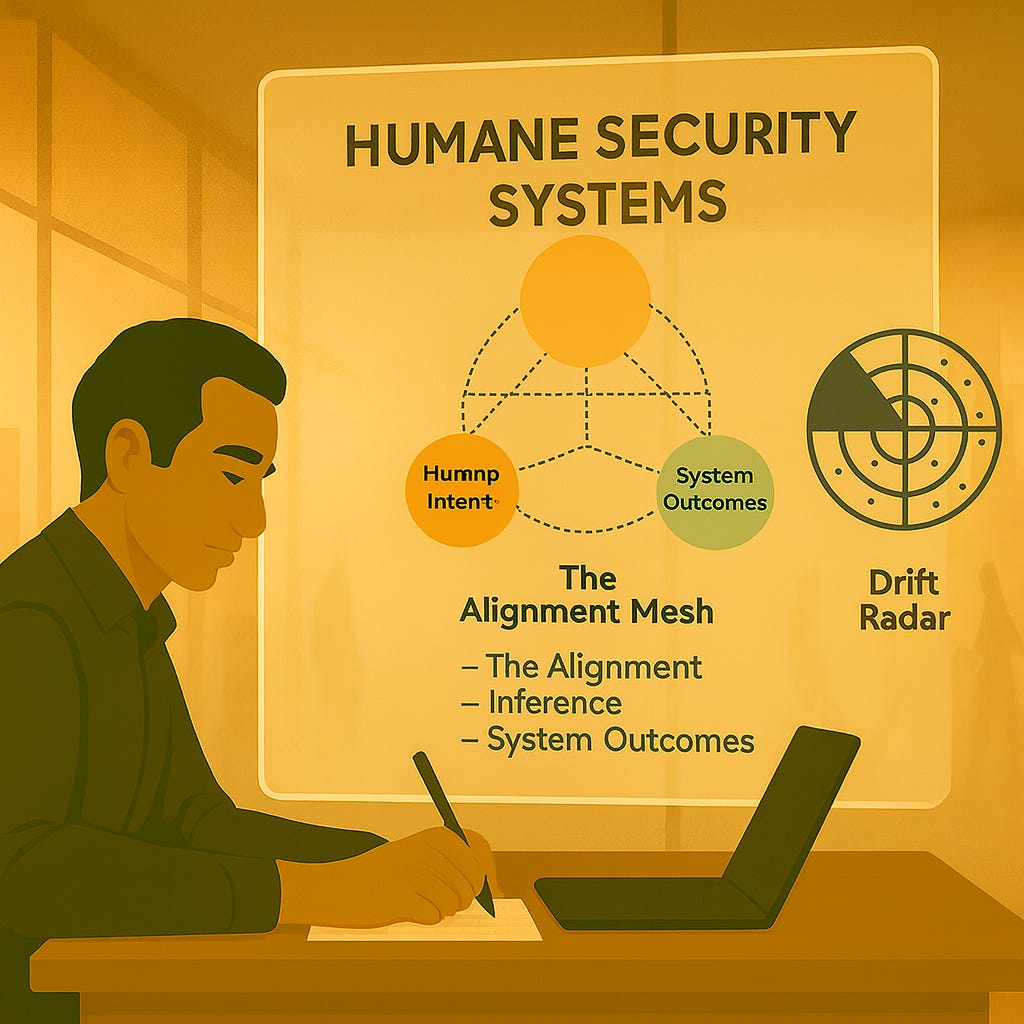
Your employees, partners, and customers are already running on models—whether or not you sanctioned it. This makes humane security the defining mandate. It’s not just about protecting data—it’s about safeguarding decision integrity, accountability, and trust across the entire ecosystem of intelligence. Humane security extends to people, organizations, the planet, and even AI systems themselves as actors in the network.
If “the org is the model,” then humane security is what keeps the core systems protected, coherent, and aligned. In a world where intelligence is continuously upgraded, aligned incentives across humans, systems, and the environment become the only defense against systemic drift and aligned futures.
Field Insight: When Models Upgrade Themselves
🚨 OpenAI is the organization, but the notion that the model can upgrade itself is here and out of our control.
The rollout of GPT-5 became a case study in systemic fragility. Within hours of launch, OpenAI retired legacy models—like the widely used GPT-4o—without warning. Enterprises and creative professionals alike saw trusted workflows break overnight, from automated reporting pipelines to creative co-pilots people had relied on for months.
Wired documented users complaining that GPT-5 felt “way dumber,” while the Wall Street Journal reported how its robotic tone disrupted creative and client-facing tasks. Meanwhile, The New York Times and The Verge chronicled compliance teams scrambling as employees bypassed sanctioned systems to work directly in GPT-5.
Lesson: When core infrastructure resets outside your control, trust collapses instantly. Humane security is not a firewall—it is the system that preserves coherence, continuity, and alignment across people, ecosystems, and intelligence itself.
What to Do This Week:
This is not a diagnostic exercise—it’s an emergency drill. Treat the GPT-5 reset as your live-fire test and act this week to harden the foundations that will matter when the next reset comes:
Use this as a meeting agenda for your leadership team. Schedule 30 minutes, put these questions on the table, and capture the outcomes:
If GPT-5 disappeared tomorrow, which of our workflows or client promises would break instantly? (Outcome: A list of critical dependencies to protect.)
Who in our organization actually owns the outcomes shaped by AI—and would they catch a misaligned or unethical decision before it reached a client or the market? (Outcome: Clear ownership and escalation paths.)
What core systems—human well-being, client trust, ecosystem health, institutional memory—are we actively securing against, and which are we leaving exposed? (Outcome: A prioritized map of what to secure next.)
Do not wait for the next model reset. By the time it arrives, it will be too late to design from scratch. This week’s meeting outcomes are your first layer of humane security infrastructure.
Above all, define what humane security means for your organization. List the core systems you cannot afford to lose—for human well‑being, client trust, ecosystem health, institutional memory, and the AI agents themselves. Then ask: what infrastructure, safeguards, and aligned incentives will secure each of these systems for what comes next?
To deepen this work, revisit your Intelligence Map from earlier briefings. Cross‑reference the systems you identified there with the humane security agenda here. Where flows of intelligence intersect with your most critical assets, that’s where protection must scale first. Until leaders answer this clearly, humane security remains an aspiration instead of a defense.
Are You Ready?
Model choice is gone. Reset is the new default. While some of GPT-5’s abrupt changes were rolled back under public pressure, that doesn’t mean organizations are prepared for what comes next. The next reset may not be softened—or reversed. The only defensible move is to be structurally ready: able to adapt as fast as intelligence itself, with humane security infrastructure that protects what matters most—humans, ecosystems, and intelligence itself—no matter how the terrain shifts.
Frameworks For The Transition:
We’re offering a free workshop for our subscribers to dive deep into these frameworks to build Humane Security Systems.
